 TAROT
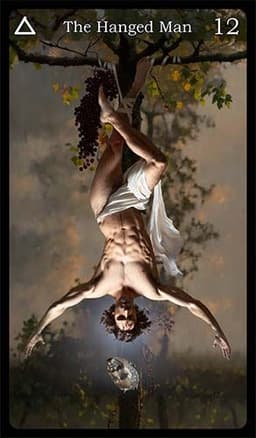
TAROTThe Hanged Man
Upright
Acceptance of the current situation. Moving forward by sacrificing the ‘old you’.
Enlightenment via a trial.
Reaching an impasse; pausing to find a new way forward
Overcoming feelings of being trapped by finding a ‘new you’. Ignoring past slights to move forward.
Intuition
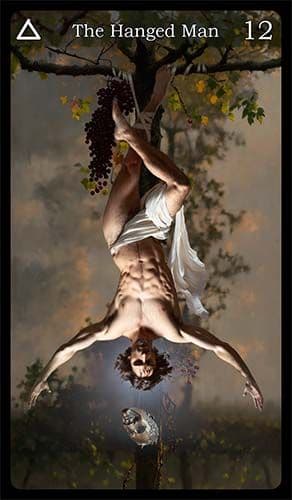
As well as the standard Tarot meaning for the Hanged Man, the Hanged Man in this deck, Dionysus, brings with him the symbology of the Dionysian mask.
Upright, the mask falls from the face. Reversed, it falls over the face. Thus, the mask reflects self-image and self-identification. The reversed card may signify repressing this true-self.
Reversed
Feelings of being the only one who is correct; acting the martyr.
Sacrificing yourself to a cause for no gain.
Holding on to past methods that no longer work.
A need for more flexibility and open mindedness. Not showing your true self.
Astrologia
Dreams, intuition and spirituality. Open to change and transformation, high creativity and problem-solving. Prone to delusion, over-idealism, or indecision.
The Hanged Man
The Hanged Man is one of the most recognizable Tarot cards. He represents shifts in perspective and transformation through pause, self-sacrifice, and reflection.
This shift in perspective may involve changing the way you view success and altering your goals. It may entail going against the majority view, yet knowing you are correct because you see things differently.
One of the most interesting meanings of the Hanged Man is sacrifice. Many descriptions do not really show how this works (as it does not just mean allowing change to roll over you). It involves;
- Approaching an insurmountable trial that blocks the way forward.
- Sacrificing one’s old Self through attempting the trial and failing.
- Emerging through the trial as a new-self. This new-self is capable of passing the previously insurmountable trial with ease.
This occurs because the trial is the truest and strongest form of learning; think differently, fail differently, but use that failure to uniquely win.
This sacrifice or self-martyrdom involves a death-rebirth akin to a snake shedding its old skin, and appearing young again. The new skin allows growth, and this growth allows passing the trial. It is not something forced on the Hanged Man through circumstance; he wants this to happen and has paused to prepare for it.
Although he hangs upside down, the Hanged Man is not uncomfortable; he faces his death serenely. He hangs not from dead wood but from a living tree: he will cheat death because life literally supports him. He also wears a halo, signifying a higher state of being that will allow rebirth.
He is unafraid because like the High Priestess, he holds the secret to immortality, but this is a different kind of immortality that comes from a different place. The Hanged Man knows what it is to be mortal and is pushed towards death simply by the process of being alive. But he cheats death by making his death a rebirth as a new, more powerful entity.
There are many archetypes that follow this twice-born resurrected motif, but the oldest one known to Western culture is Dionysus.
Dionysus
Dionysus is the god of wine and a fertility (particularly virility and sex). As he is a resurrected god and knows what it is to die, he took pity on humans for their mortality and hard, short lives, giving them wine so they could at least enjoy themselves.
He is also associated with religious ecstasy, trance states, and pleasure; the Dionysian cult incorporated these into its rites. Thus, Dionysus is a god deeply familiar with altered states and seeing the world through a different, more colorful perspective.
Dionysus is associated with performance and dance. The 'happy/sad' masks seen in theaters are actually Dionysian masks. Many early theaters were purely religious, and masked 'mystery plays' were common in Europe well into the Middle Ages. Perhaps Hollywood is just one big temple of Dionysus (given many Dionysian pleasures are famously common there).
On the downside, he is also the god of madness. Brilliance and madness are very close siblings. The Orphic tradition goes further, elevating Dionysus to a key archetype and creating a massive cult in ancient times.
The Orphic tradition has Zagreus as the son and heir of Zeus, but the young god is taken by the Olympians’ enemies, the Titans, and cut up and eaten. The Titans are destroyed and burnt to ashes for this crime. Zagreus is resurrected as Dionysus and humankind appears from the ashes. Thus, mankind has aspects of both the Titans and The Divine within them.
Dionysus has a special relationship with humankind. We were created as part of his resurrection, formed from his body. Our salvation lies in mirroring his resurrection and understanding death through it. The Hanged Man as Dionysus is symbolic of this sacrifice and rebirth.
Note a key difference between the Dionysian resurrection myth and other resurrection myths: the Dionysian myth is free of human sin, and Dionysus wants us to enjoy the material world to the fullest whilst minimizing suffering. Life is already hard as it is, so enjoy the best parts.
As mentioned above, Dionysus is the God of pleasure, or in Greek hēdonē, which is where hedonism comes from, making Dionysus a God of Hedonism.
Life is already hard as it is, so enjoy the best parts!
If you are metaphorically stuck upside down on a tree, view the trial as a precursor to a different kind of success through growth and transformation. It will make you better; you will pass through it stronger and enjoy life more fully with this new understanding.
The large trials you encounter in life provide more insight into immortality than any amount of dusty scrolls. They give you a visceral understanding of the death-and-rebirth cycle, and this alone can propel you toward the divine.
Description and Symbology
Although there appears to be very little happening visually in the Hanged Man, the symbology of Dionysus makes it profound yet simple: trials and tribulations are often just pauses that ferment future success, happiness, and pleasure, because the trials you endure make you stronger.
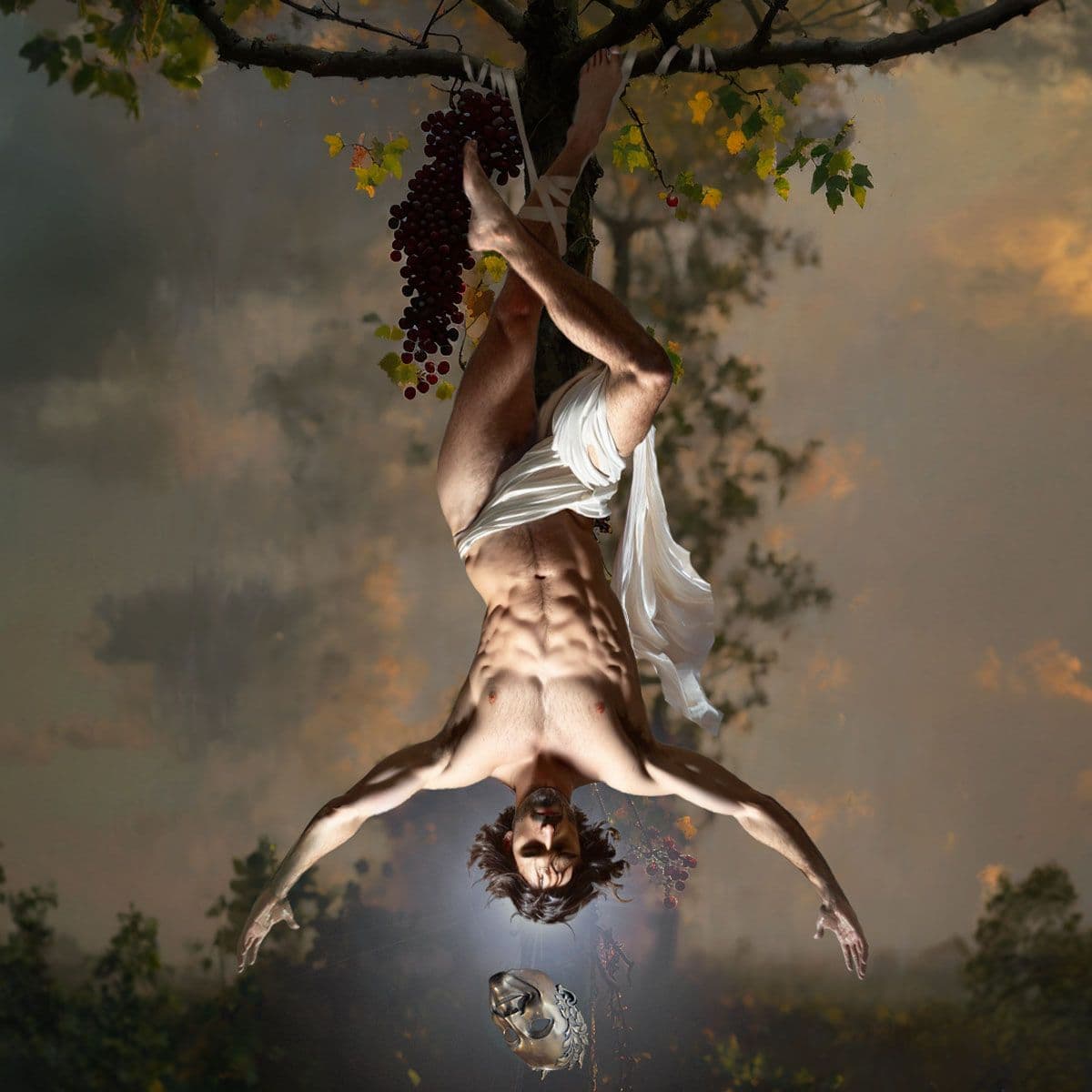
We see a T-shaped tree, where 'T' represents the letter Tau, associated with both life and resurrection in Greek. The tree is in a vineyard and bears grapes. Upon this tree hangs the god Dionysus.
Although he is in a potentially uncomfortable and hazardous position, he seems serene. A mask falls from his face. His face has a halo around it, and a strange light shines on him: strange because it seems to come from the ground rather than the sky.
Finally, Dionysus has his arms outstretched and palms out in a symbol of giving rather than surrender.

Card Symbol
The Card symbol is the delta, the first letter of ‘Dionysus’. It is also deeply spiritually symbolic, representing change and transformation. It points upwards, suggesting growth and a direction of travel. In mathematics and physics, the delta means ‘change’ or ‘transformation over time’, so a delta preceding any quantity denotes change in the quantity. Spiritually and physically, delta always means the exact same thing.
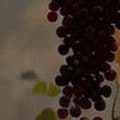
Vineyard and wine
The hanged man is suspended from a t-shaped tree. Such shaped trees (espalier), are common with fruiting plants especially in vineyards, as the fruit then grows on easy to pick horizontal branches. The tree has grapes on it, confirming a vineyard and wine.
Wine makes you happy, but also gives you a bad head; enjoy both as part of the same journey!
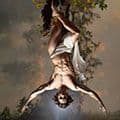
The hanged man’s pose
The hanged man’s pose is not a position of pain, he is actually in a pirouette during a Dionysian dance. This dance denotes victory rather than being trapped, and is seen later in the final victory of the World card.
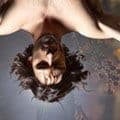
Halo and liminal light
The hanged man has a halo around his head, signifying that his situation had led to a deeper understanding. He is bathed from a light source, but it comes from below rather than from above. Dionysus, (like Hecate) is a liminal god, and his power comes from the earth and not from the sky. Earth liminal gods are always associated with rebirth and the afterlife.
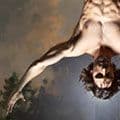
Outstretched arms and sacrifice
The hanged man has his hands out in a symbol of giving rather than pain or confinement. He is giving his old self up; that version of him cannot pass through the current trial. Instead, he has been reborn through the trial itself, and a new, more powerful self will break free and continue. This rebirth will mark a major turning point in the hanged man’s life. He will emerge much stronger.
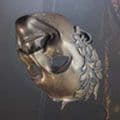
Falling Dionysian mask
The hanged man sees the world differently from others, giving him different sight and thinking. The mask suggests changes in how the hanged man sees himself, and how he will present himself after the trial. The upright card shows the mask falling from him, revealing his true face to the world. Reversed, the mask falls onto his face, repressing the true self from the world. In either case, the trial may fundamentally change him.
Tips for Readings
The following table shows the upright and reverse meanings for general questions. The last row ('Yes/No') is useful when you are picking a single card to decide a yes or no decision.
Upright
Reversed
You need to look at the relationship from the eyes of the other person to move forward.
Patience and understanding.
Let go of past slights so that the relationship can move forward.
Be wary of being taken advantage of; don’t be a martyr to other people’s problems.
Address stagnation in the relationship before it becomes frustration and anger.
Reassess priorities and ‘what winning looks like’.
Suspend moving forward, instead letting things pan out more fully before making your move.
Learn better for next time.
Expect setbacks and lack of progress.
You may be stuck in a rut or experience broken promises.
Patience is key. Assess the situation, sacrificing old assumptions, and look for other ways to move forward.
Let go of stresses in your life by reappraising what really matters.
You may need to look at things with new eyes and redefine success.
This may require taking a break to reassess and recoup.
Address any willingness to sacrifice your wellbeing for a greater good.
Slow down and realize you are not someone else’s martyr.
A time to patiently question beliefs and values that may be slowing you down or leading you astray.
Sacrificing parts of your old-self may be necessary.
Address resistance to change or holding on to a previous self that needs to be shed.
The card suggests nurturing a willingness to be more flexible and open.
Reassess old habits and spending as they may be causing problems.
The future may require new plans and changed goals, and this is a good time to stop and plan for them.
Look at long held positions and beliefs on finances, as they could now be out of date or wrong. Your world may have slowly changed and your plans no longer match it.
Don’t leap to change everything at once; patience is key.
Yes, through enlightenment via a trial, patience and self-rebirth.
No, through stagnation and possible denial and/or failure to notice change.
Reading the Card
The Hanged Man in this deck is Dionysus, the god of wine, ecstasy, hedonism, and madness. Problems are there to test you, but sometimes they cause us to forfeit the joys of this life in the pursuit of the next one. Dionysus tells us to enjoy this life. Trials will always arise, bringing moments of personal rebirth to make you a stronger, wiser person. Use that knowledge and strength to look at the here and now with a view to enjoying it, savoring the satisfaction of a journey completed.
Furthermore, you do not need to believe in a specific deity if your personal rebirths are profound enough. This is a route to touching the divine without ever relying on organized belief by rote.
The Upright Card
The Upright Hanged Man denotes a challenge or trial in life that should be accepted as part of the 'cost of living'. By accepting it, and more importantly, accepting the changes it will cause, you transform yourself.
This process is made easier by pausing before a difficult challenge, or immediately after an initial failure. Reflect on yourself, identify the parts that will cause you to fail, and leave them behind. You replace them with a new Self that can succeed. You will now pass the challenge because you have learned to make yourself impervious to it. Again, you win not by fighting, but by changing yourself.
There are two parts to the Hanged Man in this deck:
- Realize the world and the challenges it throws at you are periods of true growth.
- Realize a part of yourself for what you truly are, as the trial lies inside of you, and bringing the inner true self out is the solution.
Depending on the question asked, one or the other may be the real trial ahead, forming a strong part of the answer.
The Reversal
The Reversed Hanged Man denotes meeting a challenge but remaining inflexible to change.
It can also result from 'fighting fire with fire'. For example, your challenge pits you against a strong-willed and inflexible individual, and you have taken to the battlefield wearing the exact same armor and defenses. Neither party can grow or learn, resulting in a futile, long, and exhausting battle.
In either case, your current Self cannot pass through this challenge without change, leaving you literally hanging there. This results in stagnation through waiting, and frustration of being left stuck in a situation with no way out.
The reversed card tells you the way forward is to either:
- Accept the change that the situation demands, and allow it to change you. This may result in temporary losses, but moving forward will yield long-term gains. Accepting and moving on puts distance between you and the root cause. This will seem like a loss initially, but time will take hold, and it will become just another blip in your rear view mirror.
- Accept the situation, step back, and pause. Learn what you need to beat it, changing yourself in the process. This will take time and planning up front, and it may seem like you are left hanging there, but the changes you make are the best kind: learning through a trial. This is true learning, as it builds long-term character.
Card Design Process
The root idea of using Dionysus as the Hanged Man was originally decided because the only way a T-shaped tree would exist naturally is in a vineyard as an espalier tree. As the idea was developed further, however, the archetype seemed to fit completely in all aspects.
The Hanged Man in most original decks has the bent foot behind the straight one. This is an unusual position; when hanging upside down, it is painful (as per the older version of the Hanged Man, The Traitor). In this deck, the bent foot is in front. This is a much more comfortable position when hanging (as the leg can move freely), but that is not the main reason for the change: it is because the Hanged Man is actually dancing. Both the Hanged Man and The World card use this bent-leg-in-front pose, as it is closer to a very common dance move: the ballet pirouette.
The name Dionysus is of unknown origin, but it probably means 'young Zeus'. If you look closely at the Emperor card, you may see the intentional family resemblance.
The card background was created from photography of trees, manipulated to form a T-shape. Dionysus was created from a mood board of male ballet dancers, a 3D model, and AI generation, then turned upside down. The elements were composited together in Photoshop, along with a 3D model of the Dionysian mask.
Final Words
The Hanged Man represents a period of suspension and surrender, often signifying a need to rethink perspectives and goals, accepting new realities before moving forward. It can also mean changing oneself more fundamentally via self-reflection and spiritual rebirth. This results in a stronger person, fit to advance by shedding the Old Self and emerging rejuvenated in a new skin.
The Hanged Man represents a completely different, non-conventional way of viewing the divine. The world itself is your teacher, rather than any holy book.
This path works so long as you learn well from its lessons and surrender yourself to change, for that is where true growth comes from.