 TAROT
TAROTJudgment
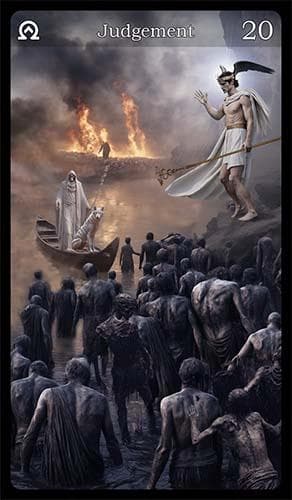
Upright
Serving your higher good through transformation.
Reaching a major life-goal. A better understanding of yourself by judging yourself against personal convictions.
Finding your calling and transforming yourself to meet it.
Intuition
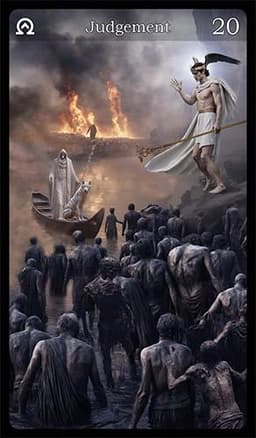
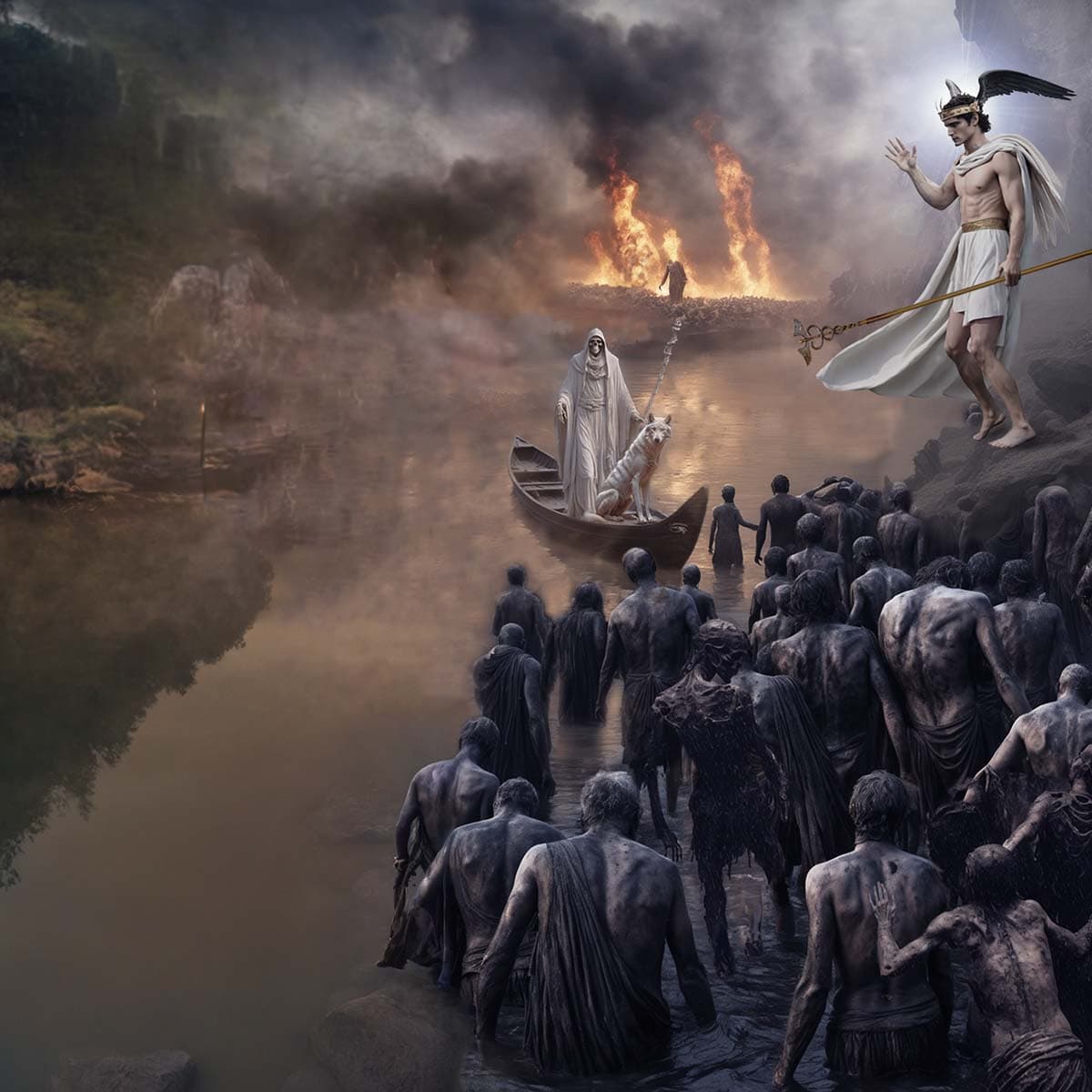
The card shows a more ancient view of judgment as a continuous process where souls journey to the afterlife as they die, rather than awaiting a single Day of Judgment at the end of this world.
This is closer to the personal belief most people have, irrespective of what modern religions specify. Deceased loved ones are already in the afterlife and may even be able to look over us.
Reversed
Failing to define or reach life goals, resulting in a lack of direction or judging yourself as a failure.
Judging yourself and others harshly. Failing to let go of past mistakes or old ways of thinking. Inability to move on.
Astrologia
Major transformations and rebirth, deeper unconscious emotions or the ‘shadow self’. The gateway to either salvation or deep obsessions and addictions.
Judgment
The Judgment card (sometimes called The Last Judgment) represents a profound change after the long spiritual and physical journey of the Major Arcana. The final card (The World) will be the boon gained from this journey, but before this, the boon must be decided via Judgment.
The Rider-Waite-Smith card probably refers to the Christian resurrection, particularly 1 Corinthians 15:
When you sow, you do not plant the body that will be, but just a seed, perhaps of wheat or of something else… The body that is sown is perishable, it is raised imperishable; it is sown in dishonor, it is raised in glory; it is sown in weakness, it is raised in power; it is sown a natural body, it is raised a spiritual body.
This ties into much older analogies: the dead as a buried seed or a hidden chrysalis that transforms into the final resurrected being. This was the core message of far earlier beliefs, such as the Eleusinian and Dionysian mystery cults.
The Judgment card cements the journey mapped out by the Major Arcana as one of spiritual transformation. Although every reader works differently, one way to conceptualize the deck is as follows:
Judgment represents outcomes: the renewal, redemption, inner growth, and transformation gained from the journey. It can refer to a complete reincarnation of the Self, a change in life, or a new meaning within it. In all cases, this judgment comes via a trial. This trial can be your own self-judgment (or self-forgiveness), the judgment of others, or circumstances conspiring to deliver what you deserve based on previous actions.
This card uses several ancient motifs to represent Judgment:
- Hermes: The Greek spiritual guide for the dead (psychopomp).
- Wepwawat: One of the oldest known Egyptian gods, denoted by his animal form: a white wolf or jackal. He sits on the prow of the boat carrying the dead across the river.
- Charon: The Ferryman of the Dead. Although Charon took many guises in ancient times (a brash sailor, an unkempt old man), he is most often depicted today as a skeletal figure in a shroud. He allows those who have received funeral rites to cross the River Styx (or Acheron). This trip requires a coin, left with the deceased as payment for the journey.
Hermes
The High Priestess (Hecate) is the liminal deity who controls the barrier between the living and the dead, but she does not guide the dead across it. That task falls to Hermes as the Soul Guide, or psychopomp.
Hermes controlled personal journeys across liminal spaces, and death was the ultimate journey. He was a god of souls: not just a messenger, but a mediator between the human and divine realms.
He is shown on the card in this role, guiding people who have risen from the mud at the edge of the River Styx, awaiting the Ferryman for their final crossing.
Wepwawat
Animal forms usually denote the oldest gods, as our ancestors created them first, basing them on the beasts around them and their relationship with humanity. Wepwawat is one of the oldest Egyptian gods, representing one of the oldest animal archetypes: the wolf.
His place of origin was Asyut in Egypt, later called Lycopolis (literally 'City of Wolves' in Greek). He was originally viewed as a scout and protector (his name means 'Opener of the Ways'), a god who helped achieve victory in war and hunts.
His association with death led him to be linked with funerary rites, occupying a position as a Soul Guide much like Hermes. Here, his title 'Opener of the Ways' took on a new meaning: opening the path to transformation and rebirth after death.
Wepwawat is shown seated at the prow of Charon’s boat. We also see the Eye of Horus at the front of the vessel, used here in its role denoting restoration.
Charon
Charon has no obvious mythological root (although he is thought to originate from Egypt, perhaps as a later version of Wepwawat or Anubis). He is tasked with ferrying the souls of the dead onward after Hermes brings them safely to the edge of the Styx.
He requires a single coin as payment, traditionally left with the deceased as part of the burial rites. Those without a coin were fated to wander the near side of the Styx, potentially crossing back to the human world as ghosts or shades, or eventually being reincarnated into another life.
The Dead souls
The dead souls are depicted in the same form as they were buried. They push out of the mud on the bank of the River Styx, awaiting Charon’s boat to take them onward.
In the distance, we see a far shore where physical bodies are consumed by fire. This transformation by fire is drawn from the story of Demeter and Demophon: the mortal part is burned away, leaving only the immortal spark.
The final stage of Judgment (being judged by Minos, Rhadamanthus, and Aeacus to decide where the soul will reside for eternity) is not shown on the card. This is because the Tarot card is primarily concerned with the journey of transformation, not the final destination.
Description and Symbology
As implied above, the card illustrates Judgment using the ancient Greek vision, while referencing root Egyptian motifs.
It should be noted that the ancient view of death differs from modern religions that anticipate a final 'Day of Judgment' or Resurrection. The ancients saw the afterlife as a continuous process, not a single event at the end of the world.
This 'continuous' version is perhaps closer to what most people personally believe today. We feel our loved ones are already in the afterlife, perhaps even watching over us, rather than suspended in limbo awaiting a universal Day of Judgment.

Card Symbol
We see the symbols for the first and last letters of the Greek alphabet; alpha and omega meaning beginning and end. This combination of letters has many meanings in current orthodox and non-orthodox teachings and relates to an all-pervading and infinite sense of the Creator, of which Judgment is only one part.
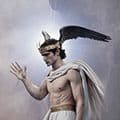
Hermes as the Soul Guide
Hermes is shown as a Soul guide, standing on the bank of the River Styx (in some myths it was the River Archaeon).
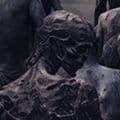
Dead souls rising
The dead rise from the wet mud at the shore of the River Styx. This symbolizes the first part of the transformation from being buried into the ground of our world to crawling back out of another earth. This other earth is the world of the spiritual afterlife. At this stage, the dead have the bodies they died with.
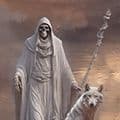
Charon and Wepwawat as the Ferryman
The dead must convince the ferryman Charon to take them to the next stage. Those who died without proper funeral rites or without possession of a coin for the ferryman were cursed to stay on the shore or haunt the previous world as ghosts or shades.
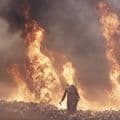
Transformation
Although this is the smallest detail of the card, it is the most important; the dead on the far side of the Styx being transformed from mortal to immortal. This occurs via a divine fire that consumes the mortal part, leaving only the immortal. They will then go on to be judged by the three Greek judges of the dead; Minos, Rhadamanthus, and Aeacus (the King of Swords), and this decides their final destination in the afterlife.
Tips for Readings
The following table shows the upright and reverse meanings for general questions. The last row ('Yes/No') is useful when you are picking a single card to decide a yes or no decision.
Upright
Reversed
Denotes forgiveness, healing, and renewal. Communication and a fresh start when previous issues are buried.
Reconciliation and moving forward together.
Unresolved issues and hidden agendas, resentment, or pain that prevent growth or reconciliation.
Refusal to forgive may cause serious breaks in the relationship.
This card suggests redefining goals or a coming of age in understanding new-found skills.
This may cause promotion or a fresh start and change of career or direction
You may be guilty of resistance to change as a way of hiding deeper problems, holding on to the past, or failure to see your own skills are causing problems.
These concerns need to be resolved before you can move forward.
A time to forgive yourself of previous indulgences or habits and make a fresh start.
Find a new direction that takes you out of old ways to forge a new balance.
This card suggests an inability to heal because of old habits: too little sleep/overwork, indulgences and/or overwork are getting in the way of a better lifestyle.
Expect a profound change in the way you see yourself via a spiritual transformation or rebirth of your higher self.
This opens the way to finding a new and more fulfilling meaning to life.
You are judging yourself via limiting beliefs or blaming yourself harshly for past failings. This is causing guilt and pain that prevents you from finding peace or a true meaning for your life.
You need to let go of such beliefs before you can move forward.
A time to recall past mistakes and learn from them.
This may begin with managing your money with eyes on a greater purpose in life rather than just living day-to-day.
This card denotes ongoing financial difficulties related to using money as a crutch to please or keep people onside rather than for financial stability.
You need to lose these limiting habits before you can move on.
Indeterminate because the nature of transformation is not a binary yes/no.
Indeterminate because the nature of transformation is not a binary yes/no.
Reading the Card
- The first point of confusion to address is the difference between the Justice, Temperance, and Judgment cards. Briefly:
- Justice refers to the fairness of actions.
- Temperance refers to the balance between immediate pleasures and long-term spiritual growth, living in a way that is true to what you know is right.
- Judgment refers to pivotal moments in life where we reflect on past actions that have had a profound effect. This self-reflection is often transformative. It can also represent a period when past events affect our future through providence, serendipity, or synchronicity. Some may also view this as a divine or supernatural system of reckoning.
The first two are continuous processes, whereas Judgment occurs at specific times in our lives. It represents nearing the end of a phase, serving as a tallying up of how that phase has changed you.
The other two cards that are sometimes confused are Death and Judgment, mainly because they are linked in a religious context: Death is immediately followed by Judgment.
Death rarely signifies physical death. It represents something that must end, a process that is often painful. You move forward through acceptance of the change.
Judgment, however, signifies your own self-judgment. This judgment causes an internal change that may feel unexpected, yet has often been a long time coming. It represents the end of a journey; you now have to face the consequences, good or bad. Facing these consequences is how you learn and grow to become a better person.
The Upright Card
The Upright Judgment card signifies you are coming close to a major milestone in a plan or in your life. This necessitates taking stock and self-reflection. You will gain a clearer understanding of yourself, where you are in life, and what you need to do. The card suggests now is the time to look deeply at past actions, judging them against who you thought you were, and who you actually are. You must also consider where you hoped to be, versus where you find yourself today.
These can be difficult questions to ask. Life changes are inevitable, but taking stock of them and changing yourself to find a new balance requires immense effort.
There can also be difficulty here because there is often a hint that life has finally 'caught up with you'. Your past decisions cannot be changed; you must now face all the consequences, both good and bad.
For example, the loss of a relationship can cause loneliness and pensiveness, but admitting that it was built upon poor foundations and had to end is often the only way to move forward.
The transformative power of Judgment is this: events change our lives, but until we acknowledge them and transform ourselves to accept them, they remain disjointed events. Without Judgment, we will never learn nor grow because our past is not part of the story of who we are today.
Without Judgment, we will never learn nor grow because our past is not part of the story of who we are today.
The Reversal
Given the description of the Upright card, the Reversed card is easy to understand: it is a failure to pass through the transformative phase of Judgment.
It represents:
- Failure to acknowledge success: You do not give yourself credit for your past victories. This is far more common than many realize. Taking time to reflect provides natural 'chapter ends' in your life; without them, you cannot savor progression. Instead, every success simply leads to the next problem, leaving you perpetually unfulfilled.
- Failure to let go: The inability to grow after a lost relationship or bereavement, often by avoiding addressing it entirely. This is the darker side of Judgment. We must understand that failures and bad news shape us as much as our successes. Both make us better when we accept them. We naturally dwell on what is lost or on the unfairness of the situation, but we must always consider what good remains.
- Failure to forgive yourself: Blaming yourself is easy initially, but doing it constantly blocks future growth. You must realize you did everything you could have done. Most people do the best they can with the information they have at the time. You were no different. Realizing this makes the past far easier to handle.
Card Design Process
Displaying the start of the ancient Greek afterlife was a daunting task for a Tarot-formatted card, even showing only the initial stage.
To solve this, the decision was made to ignore strict perspective. Hermes and Charon are both larger than they physically should be, and the destination shore is closer than expected. This aligns with dream symbology: things appear in size relative to their importance. The symbology would have been harder to read, or even lost entirely, if everything had been displayed within such a small space according to the rules of reality.
Interestingly, nobody noticed this distortion during card testing. Perhaps the testers were already instinctively attuned to dream symbology.
Final Words
The Judgment card represents a renewal or forgiveness that leads to a transformational change in your life, or in your way of seeing the world. When Reversed, the card tells us this transformation is being blocked by holding on to your previous life, or an inability to let go of old events.