 TAROT
TAROTTen of Swords
Upright
The end of a difficult situation. A final ordeal followed by new beginnings.
The conclusion of a difficult phase in your life, leading to a transformation.
The releasing of burdens and a fresh start.
Intuition
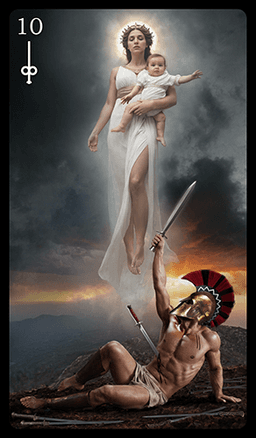
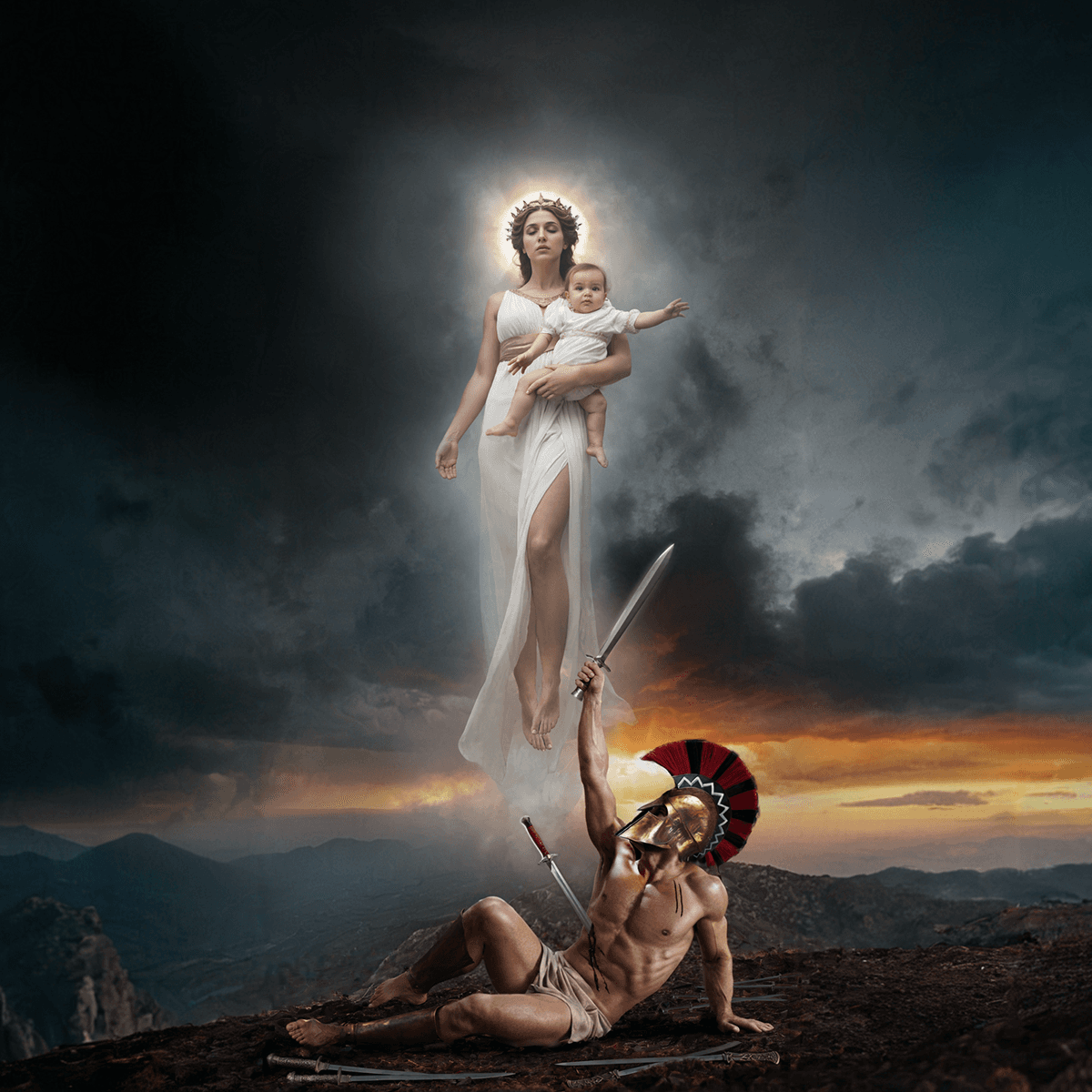
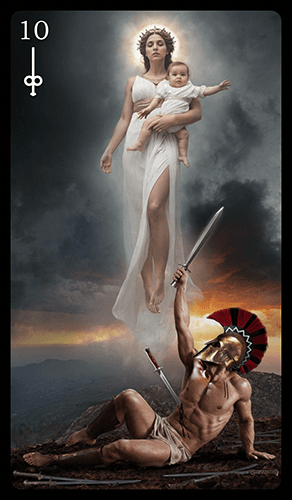
The card shows the ending of one phase and the start of another. We see the last Spartan warrior on a battlefield as he draws his final breath. In his dying moments, he sees what comes next; the Goddess Eirene (peace) holding the child Plutus (prosperity). Thus, after the last warrior willing to fight has died, we see peace. This peace raises prosperity.
Reversed
The aftermath following an ending. Recovery and learning from the past or dealing with something that is no longer in your life.
The endgame after a difficult situation. Looking to the future and dealing with the past, and rising above it or being consumed by it.
Astrologia
Communication, intellect, and thoughts as power. Ability to generate ideas through an open-minded attitude. Very versatile and able to fit into many social circles with ease. Challenges with facing fears, which may be to do with loss or perceived failure. These fears and thoughts are often turned inward against the self.
Ten of Swords
The Ten of Swords represents the final act in a tumultuous period of your life. This carries both a good and a bad side.
The bad is that change is forced upon us. In this case, the ending is painful: an outcome you tried hard to avoid. It involves betrayal, broken promises, or a failure to meet the terms of a bargain. Alternatively, it is a basic lack of compatibility and endless fighting.
Whatever the reason, it will be obvious that something had to end when you look back from a point in the future, removed from the emotion. You will not appreciate this right now. You are deep in the situation, emotionally invested, feeling as if you are fighting a running battle.
The good that comes from painful change represents the biggest transformations in our lives. We move on with lessons learned and a clean sheet on which to write our next chapter. The problem is that we remain tied to the past via trauma bonds, a need for explanations, or a desire to right wrongs. All we require is to understand, learn the lessons, and move on. However, we are too complex to execute such a straightforward plan.
One of the greatest transitions caused by the Ten of Swords is the moment we finally stop fighting, allowing the silence of the endgame to take hold.
Eirene and Plutus
Eirene literally means peace and her Latin equivalent is the Goddess Pax. She is a personification God, meaning she is not the Goddess of Peace so much as peace itself. She is one of the Horae.
There are two versions of the Horae or Seasons: Thallo, Auxo and Carpo, representing seasons of the year (noting that the ancients often only had three to our four), or Eunomia (Order), Dike (Moral Justice) and Eirene (Peace), representing the three parts of natural law and order.
Statues typically depict Eirene holding the young god Plutus (sometimes spelled Ploutos). Plutus is the son of Demeter (The Empress) and represents prosperity.
Given this, we can now understand the image on the card. We see a dying Spartan warrior. By the swords strewn around the otherwise empty battlefield, we know that he is the last warrior.
Mortally wounded and drawing his dying breath, he looks up to see what will come after him. He watches the goddess Eirene appear above him, holding Plutus in her arms.
After the war ends and the last warrior prepared to fight dies, Peace appears, and she raises prosperity.
Description and Symbology
The previous section describes a simple yet powerful image of how the ancients viewed events. Concepts like peace and love, or objects like the Sun and Moon, were anthropomorphized into characters.
In this case, the last survivor of a great battle dies, replaced by the humanized forms of peace and prosperity.
This scene ties perfectly into the sense of the Ten of Swords. A time of profound trauma is followed by something new and better. You must go through the trauma to exhaust the tensions, finally moving forward to better times.
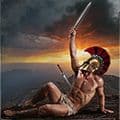
The dying warrior
The dying warrior represents the person asking the Tarot, or something to do with them. This could be a relationship, career, or set of beliefs. Whatever it is, it is about to end, and this may be painful or result in a loss.
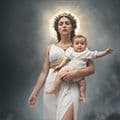
Eirene and Plutus
Eirene and Plutus represent what comes after the dying warrior; peace and prosperity. After our battles, there will always be a period of growth and moving on to something new. If we have learned from our mistakes, this new period is something better.

The dawning of a new day
Behind the characters, there is a new day dawning. This represents a brighter future.
Tips for Readings
The following table shows the upright and reverse meanings for general questions. The last row ('Yes/No') is useful when you are picking a single card to decide a yes or no decision.
Upright
Reversed
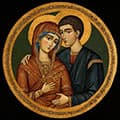
A difficult period within the relationship will find closure. This may cause a split, or it may lead to a reconciliation and agreement. Whatever the outcome, you need to process any pain and hurt with a view to moving on with your life rather than prolonging the pain.
For single people, there are issues that you need to sort out before going into a new relationship.
This is often a difficult card to see come up for relationships, but it tells you the worst is behind you, so long as you heed its message.
A painful closure or ending has already happened recently. You now need to come to terms with it.
Although there are at least two people in any relationship, now is the time to concentrate on what you want because you are now in a position to set your own path.
Leaving behind previous pain and hurt and starting a new leaf is advised, as is resolving the source of the pain with understanding, space, and perhaps forgiveness.
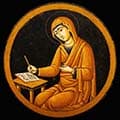
A period of your career will soon end, perhaps in a way that leaves a bad taste in your mouth or was unexpected. You may feel betrayed or strung along, or may be leaving a toxic workplace.
The card advises the next step will be an ending of this period. Although this will possibly be painful or expensive, it is now time to move on and leave the past behind to search for new avenues.
A period of your career recently ended, and you are now past the worst and possibly now starting over.
The changed circumstances may be better or worse, but it is important to leave any past betrayals, false promises or underhand actions behind as they will otherwise taint any future (or current) employment.
Learn the lessons but leave the emotional baggage behind so you can move on quickly.
You will be experiencing stress and emotional discomfort because of current turmoil in your life. The good news is this period will soon end. The bad news is that you may end up with loss and a host of emotions that go with it.
This card is a message to prepare yourself for this ending and to understand its implications so you can make sense of it and, more importantly, protect yourself and your health.
Do not try to prolong or wallow in the situation; distance, a clear head and support from others are all crucial tools to have at hand to protect you.
Although a period of stress and change has recently ended, you now have the task of moving forward.
You may still have unaddressed resentments from the past, but it is important to forgive, forget or simply learn from them and move on.
Life will change for the better, and it is essential your body and mind are both ready for the spurt of growth and opportunity that always comes after a break from the past.
You will soon experience a pivotal change in your life, and this will involve something ending.
This will try your beliefs and self-confidence, but it is important to understand such events are also transformational and will prove to you what sort of person you really are.
Change must be accepted and there may be a need to understand and forgive or create distance. A longer term understanding of what is right for you should make this transition and loss easier to bear, as will the belief that there are better times ahead once this process has completed.
You are over the worst of a difficult situation that has just ended, but your new problem is moving forward.
There may be pain and hurt from the past and perhaps a feeling that your life has changed unjustly through broken promises, betrayal or your trusting nature.
It is important to understand the past and learn lessons from it, but then leave the emotions behind rather than be a martyr to them.
You now have a clean sheet and a future. It is time to start filling that sheet!
A potentially painful result of previous poor money management or taking exuberant chances will soon end. There may be no easy way out other than taking a loss, but remember that everything has to end sometime and there are opportunities for a new beginning. It is time to forget the past, make an honest appraisal of where your finances now stand, and move forward on that basis. This may be a hard pill to swallow, but you need to do it to move forward without constantly looking back.
A potentially painful result of previous money management occurred and although you are now clear of the situation, it is time to take stock.
There may have been losses, but the worst is now behind you, and you can begin to rebuild.
It is important to heed any lessons learned, then leave the emotions of the past behind you and move on.
No because an important issue is about to reach climax and end, possibly in a negative manner.
Yes because the worst is now over, although the process may be slower than expected because you are under a period of transition.
Reading the Card
The Upright Card
The Upright Ten of Swords represents the end of a period of strife or emotional turmoil. This involves differences of opinion, betrayal, broken promises, lies, or physical hardship. It can signify mundane issues, such as basic incompatibility or a failure to get along.
It can mean an idea, political view or way of thinking that you are willing to fight for.
Whatever the route, the card dictates an end to the situation. This leaves emotional scars and wounds, but the conflict will soon conclude.
The Reversal
The Reversed Ten of Swords represents the same dynamic as the Upright card, except the situation has already ended. The challenge now is moving on and accepting the incurred loss.
Reliving the past, becoming a martyr, seeking revenge, or demanding apologies makes this harder. You allow the trauma to become a permanent, negative reminder.
It can be made better by agreeing what is just and fair, learning from what cannot be agreed, and then leaving emotions in the past. Move forward using what you have learned as a new sword, wearing your resilience as armor.
You move forward with a clearer future ahead, possessing the experience to forge your own way.
Card Design Process
The card draws inspiration from two famous statues: the Dying Achilles, and Eirene and Plutus.
The Dying Achilles was created by the German sculptor Ernst Herter in 1884 and resides in Achilleion Palace on the Greek island of Corfu.
The original Eirene and Plutus stood in the Agora in Athens (the center of Athenian business, law, and the democratic process) around 400 BCE, but is now lost. We know its appearance through a Roman copy currently residing in the Glyptothek in Munich, Germany.
Final Words
The Ten of Swords represents the close of a painful phase in your life. It advises that certain things must end for vital transformations to occur, allowing new directions in life to unfold.